Calendering machines
We will assist with selecting the right equipment for you


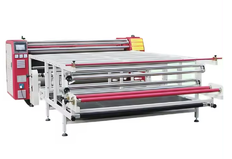


Calendering machines are specialized equipment designed for processing various materials by rolling between rolls. These machines are widely used in the textile, paper, rubber and plastic industries to produce smooth, even and thin sheets of material. Calendering machines ensure high surface quality and precise dimensions of the final product.
The principle of operation of calendering machines
The principle of operation of calendering machines is based on rolling material between two or more rolls rotating in opposite directions. The material is fed into the gap between the rolls, where it is subjected to pressure and pulling, which leads to a decrease in its thickness and an improvement in the surface. Depending on the machine design and the type of material being processed, the rolls can be heated or cooled to achieve the desired properties of the final product.
The main functions of calendering machines
- Reducing the thickness of the material: rolling between the rolls allows you to reduce the thickness of the material to the required values.
- Surface improvement: calendering machines ensure a smooth and even surface of the material.
- Size control: The machines ensure the exact dimensions of the final product by adjusting the gap between the rolls.
- Heat treatment: Heating or cooling the rolls allows you to change the properties of the material, such as strength, flexibility and heat resistance.
Types of calendering machines
Three-roll calendering machines
Three-roll calendering machines have three rolls located one above the other. They provide high performance and precise control of material thickness. These machines are widely used in the textile and rubber industries.
Four-roll calender machines
Four-roll calendering machines have four rolls arranged in the form of a square. This makes it possible to achieve a more uniform pressure distribution and improve the surface quality of the material. They are used in the production of plastics, paper and foil.
Heated calendering machines
Heated calendering machines are equipped with rolls with a heating system, which allows you to change the properties of the material during rolling. These machines are used for processing thermoplastic materials such as PVC and rubber.
Cooled calendering machines
Cooled calendering machines have a roll cooling system, which improves the properties of the material and prevents it from overheating. They are used for processing temperature-sensitive materials.
Advantages of using calendering machines
- High surface quality due to uniform pressure distribution and precise control of the gap between the rolls.
- Precise adjustment of the thickness of the material to obtain a product with the required parameters.
- Versatility in application for various materials and processing conditions.
- Reduced production costs due to the high productivity and efficiency of the rolling process.
Application of calendering machines
Calendering machines are widely used in various industries. In the textile industry, they are used to roll fabrics and give them smoothness and strength. In the rubber industry, calendering machines are used to make rubber sheets and cover fabrics with rubber. In the plastic industry, they are used to produce plastic films and sheets. In the paper industry, calendering machines are used for smooth and even finishing of paper and cardboard.
Conclusion
Calendering machines are important equipment for processing various materials in various industries. Their high performance, precision and versatility make them indispensable for producing high-quality and homogeneous products. Modern technologies and design features of calendering machines ensure their durability and cost-effectiveness in operation, contributing to increased efficiency and quality of production.
Ask questions by phone or email
-
+7 (921) 054-95-11

-
info@ecozapan.com

-
Our address: Qingdao, Binchuan Road, Unit 1, Building 15, No. 72