Flotation machines
We will assist with selecting the right equipment for you


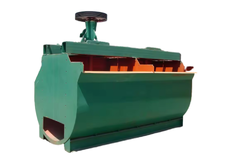


Flotation machines are devices used for the enrichment of minerals by flotation. Flotation is the process of separating particles in an aqueous medium using air bubbles that capture valuable minerals and lift them to the surface, where they collect in the form of foam. This method is widely used in the mining and processing industry to extract metals and other valuable components from ore.
The principle of operation of flotation machines
Flotation machines operate on the principle of creating small air bubbles in an aqueous medium saturated with crushed minerals. When air bubbles rise through the pulp, they stick to the particles of valuable minerals and lift them to the surface. A foam containing concentrated minerals forms on the surface, which is then removed. The remaining particles remain in the water and are removed through the bottom drain.
The main functions of flotation machines
- Creating air bubbles: Machines generate small air bubbles that rise through the pulp and capture mineral particles.
- Pulp mixing: Flotation machines ensure that the pulp is mixed evenly to improve the contact of bubbles with mineral particles.
- Foam removal: Machines remove foam containing concentrated minerals from the pulp surface.
- Control of flotation conditions: the machines allow you to adjust process parameters such as air supply speed, pulp concentration and chemical composition of the medium.
Types of flotation machines
Mechanical flotation machines
Mechanical flotation machines use rotating impellers to create air bubbles and mix pulp. They provide high efficiency and are widely used in the mining industry.
Pneumatic flotation machines
Pneumatic flotation machines create air bubbles by injecting compressed air into the pulp. These machines are characterized by a simple design and low energy consumption.
Flotation columns
Flotation columns are high vertical tanks in which the pulp moves upwards and air bubbles rise from below. They provide a high degree of separation and are used to enrich concentrates.
Flotation cells
Flotation cells are small reservoirs that operate as independent units or as part of a larger system. They provide high flexibility and the ability to adjust process parameters.
Advantages of using flotation machines
- High enrichment efficiency due to the precise separation of mineral particles and waste rock.
- Flexibility in setting up the process to achieve optimal flotation conditions and maximum mineral recoverability.
- Reduction of processing costs by increasing the concentration of valuable components in the concentrate.
- Environmental safety by minimizing the use of chemicals and wastewater treatment.
Application of flotation machines
Flotation machines are widely used in the mining and processing industry for the enrichment of ores of non-ferrous and ferrous metals such as copper, lead, zinc, iron and gold. They are also used for processing non-metallic minerals such as fluorite, barite and phosphates. Flotation machines are used for industrial wastewater treatment, removal of impurities from coal and recycling of secondary raw materials.
Conclusion
Flotation machines are an important element of the technological process in the mining and processing industry. Their high efficiency, flexibility in configuration and environmental safety make them indispensable for mineral processing and wastewater treatment. Modern technologies make it possible to create flotation machines that meet the highest requirements, ensuring reliable and high-quality separation of minerals.
Ask questions by phone or email
-
+7 (921) 054-95-11

-
info@ecozapan.com

-
Our address: Qingdao, Binchuan Road, Unit 1, Building 15, No. 72